
What Flagpole Installation and Repair Actually Covers
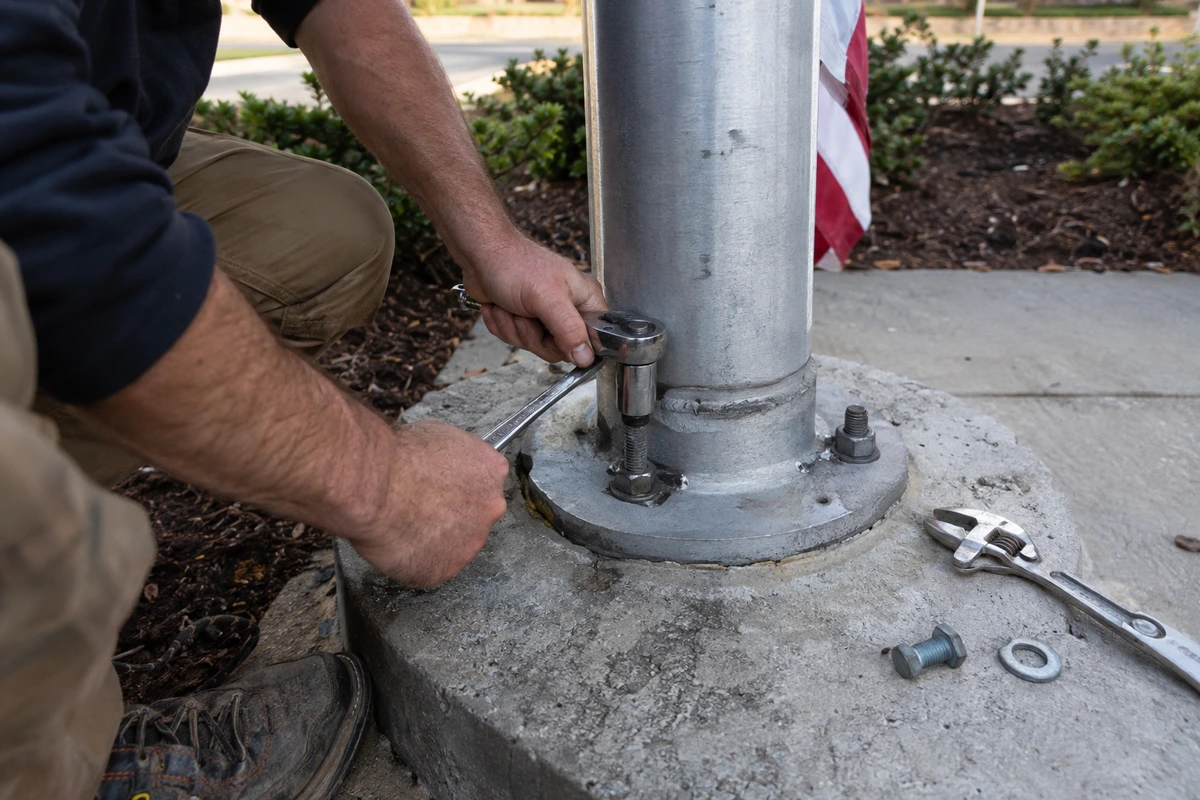
A flagpole is a tapered aluminum, fiberglass or steel shaft held plumb by a foundation in the ground and topped by a truck, the revolving cap whose pulley carries the halyard rope. Most of the load comes from the flag itself, which acts like a sail and levers against the base with every gust. Over the years that leverage loosens the fill around the shaft, corrosion eats the metal right at grade where water and lawn chemicals sit, and the halyard and pulley wear out up top. New installs mean sizing and setting a foundation to suit the pole's height and the flag it will fly. Repairs mean dealing with the top hardware and the groundline together. Rethreading a rope on a pole that leans or is thinning at the base only hangs a new flag on a failing shaft.
When Flagpole Installation and Repair Makes Sense
A slow lean is the trigger people most often misread, usually blaming soft soil after heavy rain when the real cause is loosened fill or a corroded base. Lean and groundline rust matter most because each windstorm levers a weakened pole further. A worn halyard is less urgent, but it usually snaps with the flag at the top.
- Pole visibly out of plumb when sighted from two directions
- Rust, pitting or bubbling paint at the base where the shaft meets the ground
- Halyard rope faded, fuzzy or showing frayed strands near the snaps
- Truck that no longer turns, leaving the flag wrapped around the pole
- Rope slapping the shaft with a loud clang on windy nights
- New home, business or memorial site wanting a permanent ground-set pole
Our Flagpole Installation and Repair Process
The ground at the planned spot gets checked for buried utilities through an 811 locate, and for overhead wires and enough open radius that the pole could never fall onto the house or a power line. An auger then bores the foundation hole, generally about one tenth of the pole's exposed height deep and roughly two feet wide on residential poles. We set a ground sleeve in that hole, brace it plumb and pour concrete around it, then leave it to cure before any load goes on it. Next the pole is laid out on padded stands, the truck, halyard and cleat are fitted while the hardware sits at waist height, and a boom truck or gin pole lifts it upright into the sleeve. Wooden wedges hold it plumb while a level reads two faces, then dry sand is packed in, the wedges come out, and the flash collar slides down to cap the joint. On repair visits we reach the top with a bucket truck to swap the truck or halyard. A test flag gets raised, lowered and tied off before the crew leaves.
Equipment and Materials Used in Flagpole Installation and Repair
Galvanized steel ground sleeves are preferred over setting the shaft directly in concrete because a sleeve lets a damaged pole be pulled and replaced without breaking out the foundation. Dry sand fill goes between sleeve and shaft instead of grout since it drains water away from the metal and can be dug out later. Braided polyester halyard is chosen over cotton or nylon line because it resists UV fading and stretches very little when wet. Clear-anodized or powder-coated aluminum shafts are the common pick for homes because they don't rust and weigh far less than steel. Internal halyard poles with a locking access door and winch are used at schools and businesses where an exposed rope would get cut or stolen. Rubber-lined snap hooks keep the flag grommets from banging the shaft.
Can You Do Flagpole Installation and Repair Yourself?
The small residential side of the job is homeowner work; the tall ground-set side is not. A sectional pole of around 20 feet or less, assembled by sliding pieces together and set in a ground sleeve a person can dig by hand, is within reach of two careful people with a post hole digger and a level. Replacing a halyard on a pole that tilts down on a hinged base is also fair game. Past roughly 25 feet, a one-piece tapered shaft is too heavy and whippy to walk upright by hand, and topping it out means a bucket truck. Overhead power lines anywhere near the fall radius make it pro work at any height, and some towns want a permit for tall poles.
What Makes a Flagpole Installation and Repair Job Bigger
Exposed pole height sets the hole depth, the concrete volume and whether a boom truck is needed at all. A walk around the yard rarely shows rock, old footings or corrosion hidden below the flash collar until digging starts.
- Total pole height and wall thickness of the shaft
- Rocky soil, roots or old concrete in the auger's path
- Truck and lift access across lawns, slopes or fenced yards
- Internal halyard and winch systems versus a simple external rope
- Groundline corrosion that means pulling and replacing the whole pole
- Lighting, a yardarm or a second pole added to the setup
How Long Does Flagpole Installation and Repair Take and Last?
A typical flagpole installation and repair job runs usually half a day to a full day for a residential ground-set pole, and an hour or two for a halyard or truck swap from a lift. Concrete curing stretches new installs, since the sleeve generally sits a few days before the pole goes in, and rock, tight access or a commercial height can add a second day. A well-set aluminum pole typically stands 25 years or longer. Halyards usually need replacing every three to five years, and truck pulleys every several years, sooner on windy, exposed sites.
What Comes After Flagpole Installation and Repair
An electrician often comes next, because a flag flown overnight is generally expected to be lit, and an uplight needs a buried circuit run to the base. Beyond lighting, upkeep centers on the rope and hardware that take the wind every day.
- Inspect the halyard each spring for fraying near the snaps
- Check plumb and the flash collar seal after major storms
- Retire flags once the fly end frays to cut whipping load
- Have an electrician run a buried circuit for a solar or wired uplight
How Much Does Flagpole Installation and Repair Cost in New Haven, IN?
Flagpole installation and repair in New Haven, IN typically costs between $220 and $3,271. Swapping a halyard or truck falls at the low end, while a new ground-set residential pole lands near the top. Pole height and shaft wall thickness drive most of the price because they determine hole depth, concrete volume and whether a boom truck is needed. Rocky soil, an internal halyard with a winch system, or groundline corrosion that calls for a full pole replacement will push the job toward the high end.